Affiliate Disclosure: Some of the links on this blog are affiliate links. This means I may earn a small commission if you click through and make a purchase, at no extra cost to you. I only recommend products and services I trust and believe will provide value to you.
Introduction
Here’s a question for you: would you rather be forced to spend $5,000 on 100 stocks just to make a 1% return in a single month, or would you rather spend $200 on that same 100 stocks through leverage and receive a 50% return in the same month? If you chose the second option, you’re already seeing the power of options trading.
Let’s be honest, options trading has a reputation. It’s often seen as complicated, risky, and something that only Wall Street pros can handle. And honestly? There’s some truth to that. Options trading isn’t for everyone, and if you make the wrong move, it can cost you.
But here’s the thing: with the right education and mindset, options trading can be an incredibly powerful tool in your investment arsenal. In this comprehensive guide, I’m going to walk you through Options 101, the fundamentals, the terminology, and real-world examples that’ll help you understand what all the fuss is about. My goal? To give you a solid foundation so you can make informed decisions about whether options trading is right for you.
A Quick Word of Caution: Options trading is meant for higher-level investors who truly understand the risks and can separate their emotions from the logic of investing. If you have a personality that’s prone to gambling, please do yourself a favor and walk away now. I’m dead serious. My mission with Moneyideas4me is to help you make better financial decisions, not to encourage risky behavior. For those of you ready to dive in responsibly, let’s get started.
What Are Options Contracts?
At their core, options are financial contracts. They give you the right (but not the obligation) to buy or sell a specific quantity of an underlying asset at a predetermined price before a set date. Think of them as a reservation system for stocks.
Here’s the critical detail that trips people up: A single option contract always represents 100 shares of an asset. This is called the contract multiplier. Whether you’re dealing with individual stocks, bonds, or exchange-traded funds (ETFs), one contract equals 100 shares. Your broker will display the totals during the process, but you need to keep this multiplier in mind when calculating potential profits and losses.
Now, here’s where it gets interesting: options are leveraged. This means you’re managing 100 shares for a fraction of what those shares would actually cost if you bought them outright. This leverage gives you buying power—but it also comes with risks. Unlike stocks that you can hold indefinitely, options contracts have an expiration date. When that date hits, your contract becomes worthless if you haven’t exercised it or sold it. This time-sensitive nature is one of the key differences between options and traditional stock ownership.

The Taylor Swift Concert Example
Let’s break this down with a relatable example. Imagine you or your kid wants tickets to a Taylor Swift concert. The tickets are currently selling for $100 each, and there’s an option to reserve your tickets in advance by putting down a $10 deposit. The concert is 30 days away, so this deal locks in your price for those 30 days.
Here’s what could happen:
- Scenario 1: Ticket prices surge. If ticket prices skyrocket to $150, you’re still locked in at $100 because you put down that deposit. You just saved $50 per ticket—that’s a great deal!
- Scenario 2: Ticket prices drop. If tickets fall to $75, you’d obviously choose not to buy at the fixed price of $100. You’d lose your $10 deposit, but that’s all you’re out. You could then buy the tickets at the lower market price.
- Scenario 3: The concert gets canceled. If you had paid the full $100 for the ticket 30 days prior, you’d lose the entire $100. But with the deposit model, you only lose $10.
This is exactly how options contracts work. Your maximum loss is limited to the deposit (or premium, in options terms), but your potential profit is theoretically unlimited. This asymmetric risk-reward profile is what makes options so attractive to traders.
Understanding Call Options: Betting on Growth
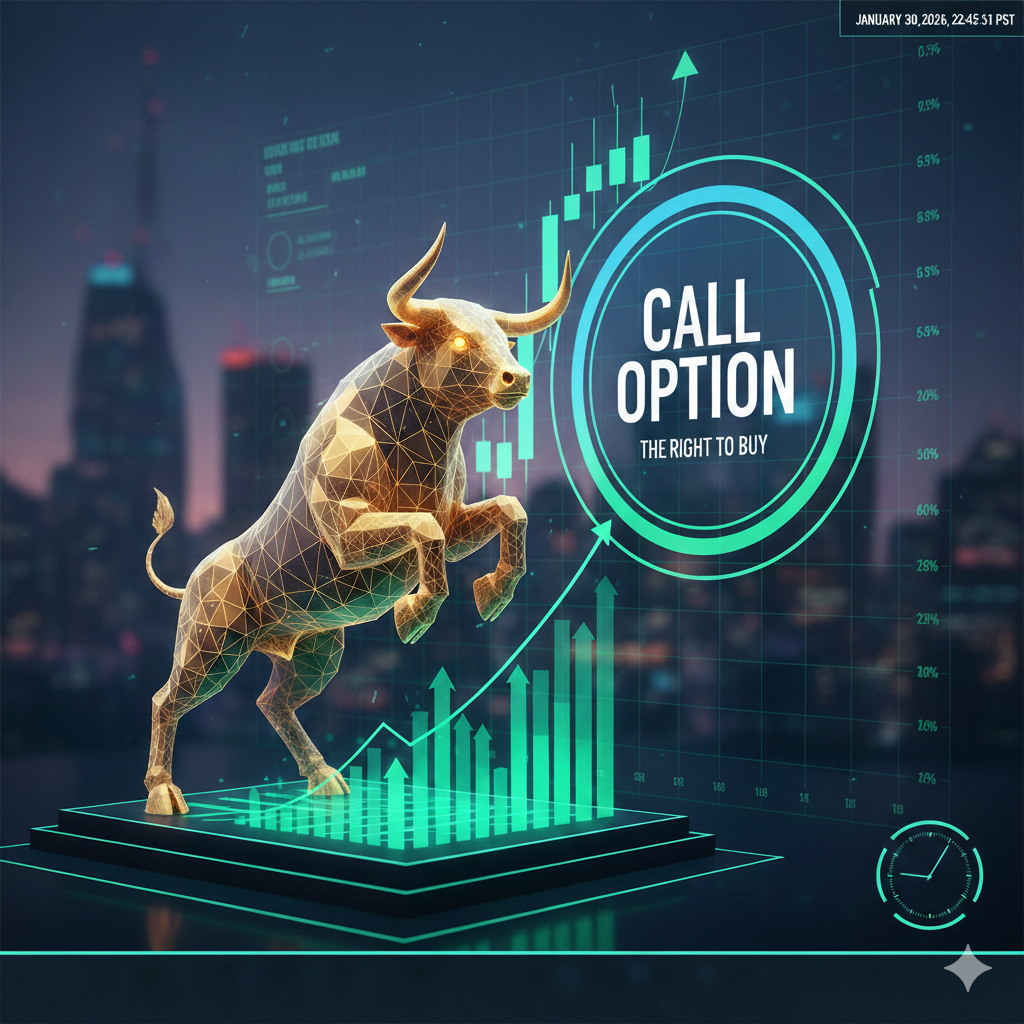
There are two main types of options contracts: calls and puts. Let’s start with call options, which are used when you’re bullish—meaning you believe the price will go up. A call option gives you the right to purchase an asset at an agreed-upon price (called the strike price) at any time before the expiration date. The price you pay for this right is called the premium.
A Real-World Example
Let’s say there’s a stock trading at $100 today. You believe that in one month, it’ll climb to $110. Because you’re optimistic, you want to buy a call option contract. When you look at the brokerage site, you’ll see a range of strike prices available. Strike prices below the current market price ($100) are more expensive because they’re more likely to be profitable. Strike prices above $100 are cheaper because the stock needs to climb higher for them to pay off.
You decide to buy a call option with a strike price of $105 at a premium of $1 per share. Remember the contract multiplier? That $1 is per share, so for 100 shares, you’re paying $100 total for the contract.
Now, let’s track what happens over the next 30 days: The stock climbs, dips around day 10, then rallies back up to $107 by day 25. Your strike price is the horizontal line at $105. Everything above that line represents potential profit—but you need to account for the $100 premium you paid. That means your break-even price is $106 (the strike price plus the premium). Everything above $106 is pure profit.
With 5 days left before expiration and the stock at $107, you have two choices:
- Choice 1: Exercise the contract. This means buying the 100 shares at $105 each, which would require $10,500 in capital right there on the spot.
- Choice 2: Sell the contract. Since you don’t want to tie up $10,500, you sell your call option contract to the market. At a stock price of $107, your contract is worth $200 ($2 per share × 100 shares). Subtract your $100 premium, and you’re left with $100 in pure profit—a 100% return in less than 30 days.
Compare that to owning the stock outright: if you had bought 100 shares at $100 and sold them at $107, you’d make a 7% return. That’s solid, but nowhere near the 100% return from the call option.
What If Things Go Wrong?
Let’s say you didn’t take any action, and the stock dropped to $105 by the expiration date. At $105, you’re at your strike price but below your break-even of $106. In this scenario, you wouldn’t exercise the contract (buying at $105 doesn’t make sense) and you wouldn’t sell the contract either because it’s not worth anything. You’d simply let the contract expire worthless and forfeit your $100 premium. This is the risk of call options: if the stock doesn’t move in your favor, you lose your premium. But that’s the maximum loss—you’ll never lose more than what you paid upfront.
Understanding Put Options: Betting on Decline
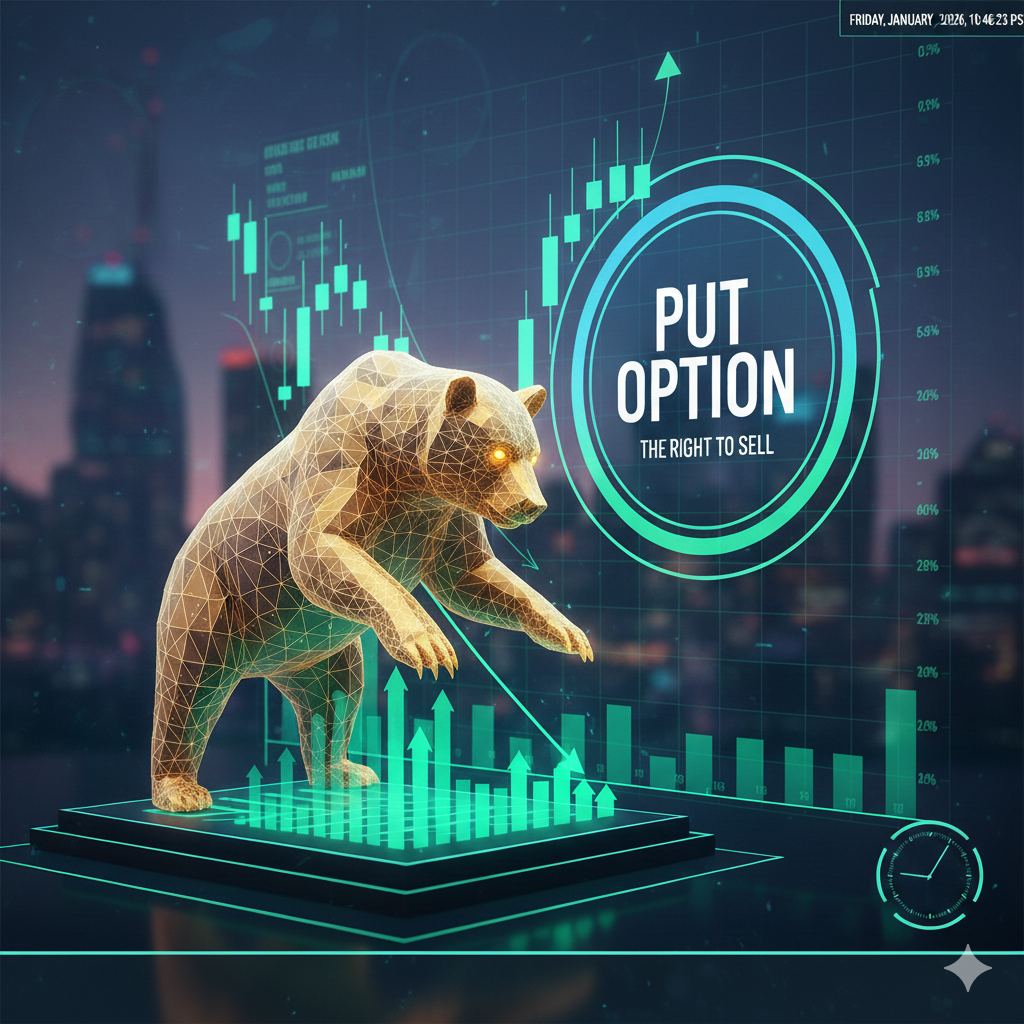
While call options are for bullish investors, put options are for bearish investors—those who expect prices to stay the same or decline. Buying a put option gives you the right to sell 100 shares at the strike price, even if you don’t actually own the stock. Think of put options as the ‘upside down’ version of call options (Stranger Things fans, you know what I’m talking about). Everything works in reverse.
A Real-World Example
et’s use the same stock scenario, but this time you’re bearish. The stock is at $100, but you believe it’ll drop to $90 within the month. You buy a put option contract with a strike price of $90 at a premium of $0.75 per share, or $75 total (100 shares × $0.75). Your strike price is at $90, but your break-even price is $89.25 ($90 strike price minus $0.75 premium). Anything below $89.25 is profit.
Fast forward 15 days: the stock has dropped to $85. This is where put options get interesting. Remember, with a put, the area below your strike price is ‘in the money.’ The stock dropping from $90 to $85 means you’re sitting on a nice profit. You decide to exercise your right to sell. Here’s the math:
- Strike price: $90.
- Market price: $85.
- Difference: $5 per share.
- For 100 shares, that’s $500 in profit.
- Subtract your $75 premium, and you walk away with $425 in total profit—in a declining market.
This is the beauty of put options: they allow you to profit even when the market is tanking. And just like with call options, your maximum loss is limited to the premium you paid upfront, which greatly reduces your risk compared to short-selling stocks.
Essential Options Trading Lingo
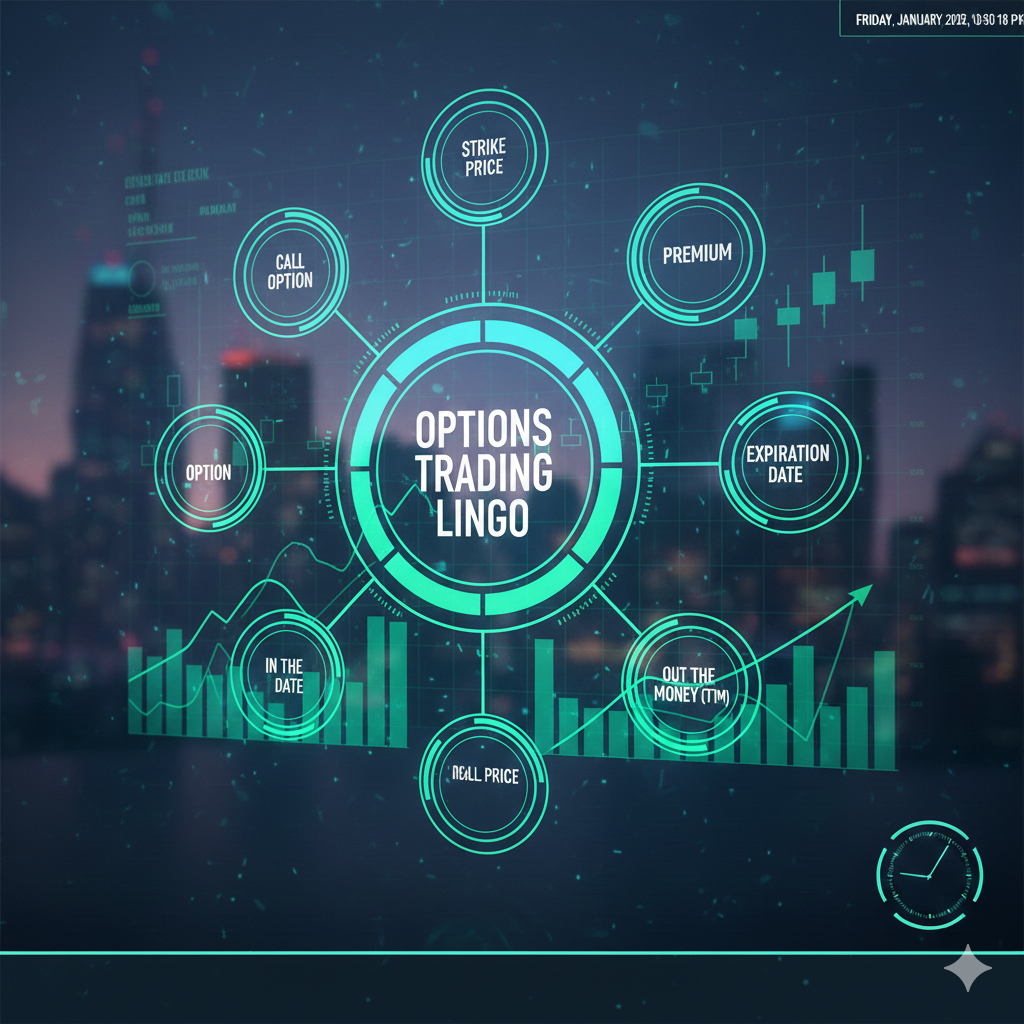
Before we go any further, let’s make sure you’re fluent in the proper options trading lingo. Here are the key terms you need to know:
- In the Money (ITM): For call options, this means the stock price is above your strike price. For put options, it means the stock price is below your strike price. When you’re in the money, you can either make a profit or buy/sell the asset at a favorable price.
- Out of the Money (OTM): The opposite of in the money. For calls, the stock price is below the strike price. For puts, the stock price is above the strike price. When you’re out of the money, exercising the option doesn’t make financial sense.
- At the Money (ATM): When the stock price is very close to the strike price. I like to call this ‘purgatory’ because the option isn’t really going anywhere—it’s just sitting there, waiting.
- Bull/Bullish: When you expect stock prices to rise. Bulls charge upward, which is an easy way to remember this.
- Bear/Bearish: When you expect stock prices to fall or stay flat. Bears swipe downward, which helps you remember the direction.
- Premium: The price you pay to buy an options contract. This is your maximum risk when buying options.
- Strike Price: The predetermined price at which you can buy (call) or sell (put) the underlying asset.
- Exercise: Choosing to buy or sell the shares at the strike price as outlined in your contract.
- Expiration Date: The date when your options contract becomes void. After this date, the contract is worthless if not exercised or sold.
Buying vs. Selling Options: Understanding the Risk
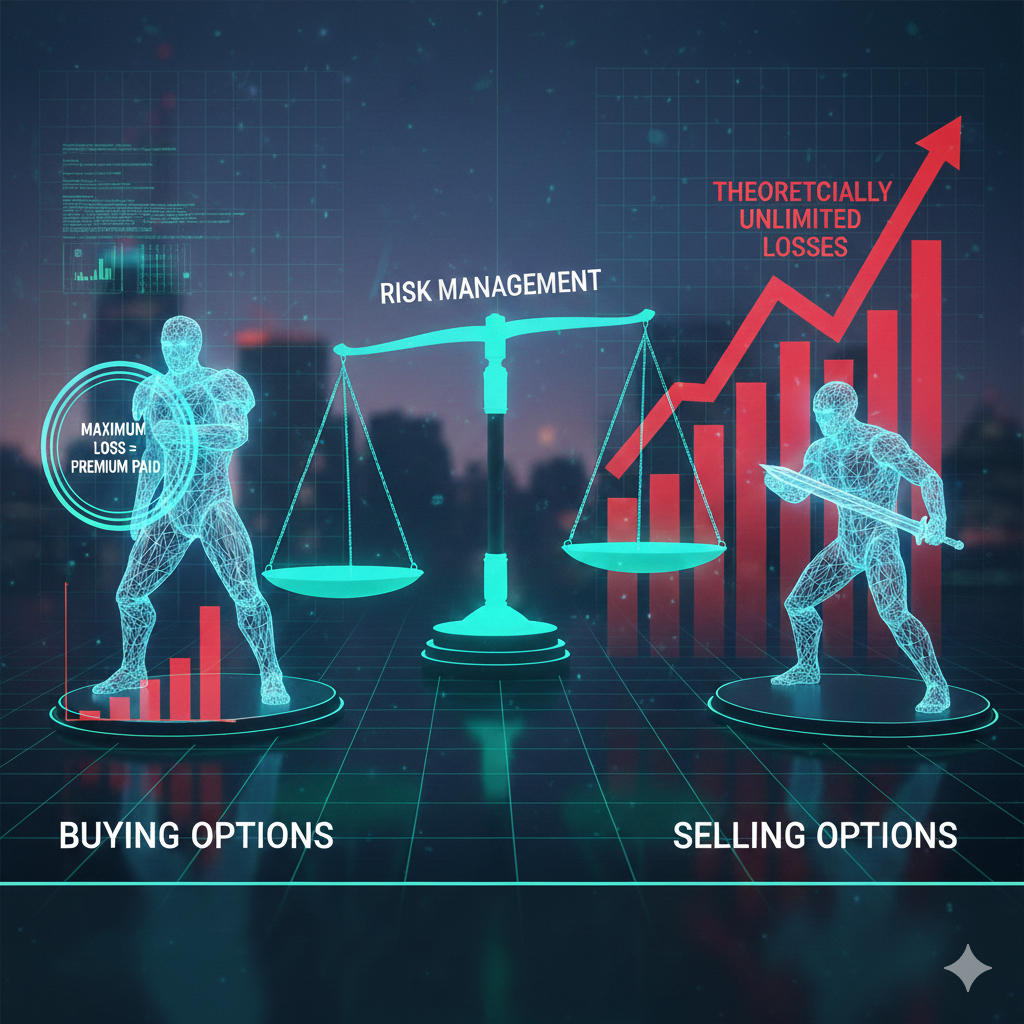
So far, we’ve focused on buying call and put options. But there’s another side to this: selling options. This is where things get significantly riskier, and it’s crucial you understand the difference.
Selling Call Options
When you sell (or ‘write’) a call option, you’re taking the opposite side of the trade. You receive a premium upfront, but you’re obligated to sell 100 shares at the strike price if the buyer exercises their option. Here’s the kicker: your maximum profit is limited to the premium you received, but your potential losses are theoretically unlimited if the stock price soars.
Selling Put Options
Similarly, when you sell a put option, you receive a premium upfront, but you’re obligated to buy 100 shares at the strike price if the buyer exercises. Your maximum loss is substantial if the stock plummets to zero.
This is where many traders get into serious trouble. Selling options can seem appealing because you collect premium upfront, but the risk exposure is massive. For beginners, I strongly recommend sticking to buying options until you have a deep understanding of the mechanics and risks involved.
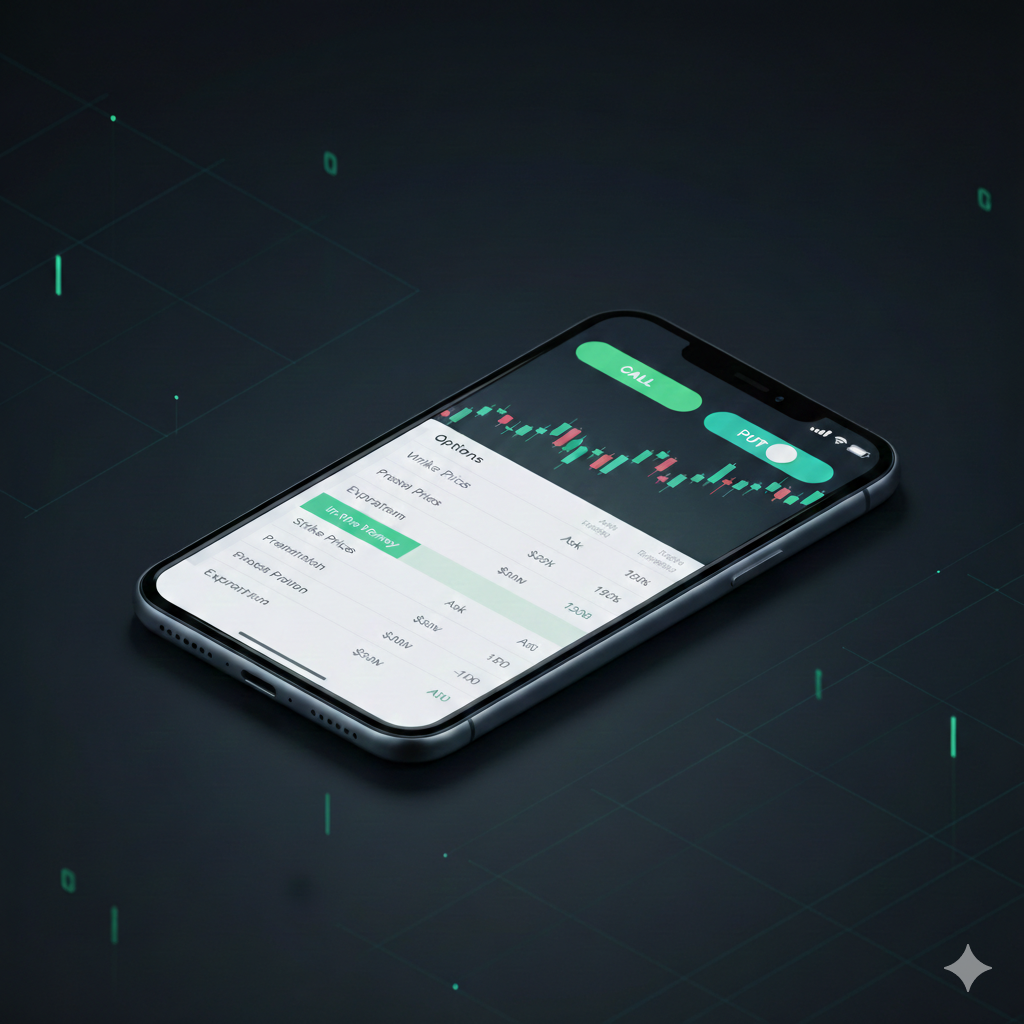
Walking Through a Real Brokerage Platform
Theory is great, but seeing options in action makes everything click. Let me walk you through what options trading looks like on a real platform. For this example, I’m using Wealthsimple, which offers a clean, user-friendly interface perfect for beginners.
- Step 1: Select Your Stock Log in to your Wealthsimple app and tap the Search (magnifying glass) icon at the bottom. Type in the stock you’re interested in (e.g., Tesla) and select it from the list. (Disclaimer: This is purely for educational purposes; I’m not recommending you buy or sell Tesla.)
- Step 2: Access the Options Tab Once on the Tesla stock page, scroll down or look for the Options tab (on the mobile app, you may need to tap the Trade button first, then select Trade options). This will open the option chain where all available contracts are listed.
- Step 3: Choose Your Strategy and Expiration At the top of the option chain, toggle between Call or Put. Since we are bullish on Tesla, ensure Call is selected. Directly below that, you will see a date, tap this to select your Expiration Date. For this example, select a date roughly 90 days out.
- Step 4: Review Strike Prices and Premiums Wealthsimple lists strike prices in a vertical column. To the right of each strike price, you’ll see the Premium (the cost per share).
- Example: If you choose a $400 strike price with a premium of $29.50, your total cost will be $2,950 ($29.50 × 100 shares).
- Wealthsimple often highlights “In the Money” contracts with a shaded background or a specific label to help you distinguish them from “Out of the Money” contracts.
- Step 5: Review Order Details and Place Trade Tap the specific contract (strike price) you want to buy. This opens the order screen where you can:
- Select Order Type: Choose between a Limit Order (set your max price) or a Market Order (buy at the current best price).
- Enter Quantity: Specify how many contracts you want (1 contract = 100 shares).
- Review Summary: Wealthsimple provides a summary that includes your estimated total cost and break-even price.
- Place Order: Tap Review, double-check your details, and then swipe or tap to Place Order.
From here, you’d submit the order. Since this is just a demo, I won’t actually execute the trade, but this gives you a solid overview of what the process looks like. Wealthsimple is particularly great for beginners because of its clean and beginner-friendly interface. Plus, there are no commissions or per-contract fees, which can save frequent traders hundreds of dollars each month. Here is an in-depth video on how to buy and sell options on Wealthsimple.

Key Takeaways: Your Options Trading Cheat Sheet
Let’s review what we’ve covered:
- Options contracts are different from stocks because they have expiration dates. When you buy options, you’re essentially buying time and leverage.
- The contract multiplier is always 100 shares. Every options contract represents 100 shares of the underlying asset. Never forget this when calculating costs and potential profits.
- Options are leveraged. You control 100 shares for a fraction of what they’d cost to buy outright. This magnifies both gains and losses.
- Call options are for bulls. Buy calls when you expect the stock price to rise. Your profit potential is theoretically unlimited, and your maximum loss is the premium paid.
- Put options are for bears. Buy puts when you expect the stock price to fall. This allows you to profit in declining markets while limiting your risk to the premium.
- In the money vs. out of the money matters. For calls, in the money means the stock price is above the strike price. For puts, it means the stock price is below the strike price. When you’re in the money, you can profit or exercise at a favorable price.
- Selling options is risky. While selling options lets you collect premiums upfront, your losses can be substantial (or even unlimited for call sellers). Stick to buying options until you’re an advanced trader.
- The premium is your maximum risk when buying. Unlike owning stocks, where you could lose your entire investment if the company goes bankrupt, buying options caps your loss at the premium paid.

Final Thoughts: Is Options Trading Right for You?
Options trading can be incredibly lucrative if you understand the risks and know how to manage your positions. But let me be clear: this isn’t a get-rich-quick scheme. It requires discipline, emotional control, and a solid understanding of market dynamics. If you’re the type of person who gets emotionally attached to trades or has a gambling problem, options trading is not for you. Walk away now and save yourself the heartache and financial loss.
But if you’re a higher-level investor who’s ready to take a calculated approach, options can be a powerful tool in your portfolio. They offer leverage, flexibility, and the ability to profit in both rising and falling markets. This guide has given you the barebone basics—Options 101. From here, you can explore more advanced strategies like spreads, straddles, and iron condors. But before you dive into those, make sure you’ve mastered the fundamentals on options trading covered in this article.
I hope this guide has made options trading feel a little less intimidating and a lot more accessible. Remember, education is your greatest asset when it comes to investing. The more you learn, the better decisions you’ll make. If you found this helpful and want more in-depth content on specific options strategies, let me know! I’m always looking to create content as I learn that serves your needs. Until next time, invest wisely and stay educated. Happy trading!