Affiliate Disclosure: Some of the links on this blog are affiliate links. This means I may earn a small commission if you click through and make a purchase, at no extra cost to you. I only recommend products and services I trust and believe will provide value to you.
Introduction
You probably know what it feels like to want a “safety cushion” when it comes to saving your money but never quite find the right way to start. The simple savings challenge I will discuss makes it very easy for anyone to start.
Imagine adding just a dollar more each time you save. Small steps build confidence, and before long your balance grows without stress on your budget.
Similar to the 50/30/20 rule, you’ll learn how to automate transfers so the habit holds even when life gets busy. You’ll also see where to park the money so it can earn a little interest while you focus on bigger goals.
By the end of the year you’ll have momentum and a clear next step for longer-term saving.
Key Takeaways
- Start small and increase by a fixed amount each period to build momentum.
- Automate transfers to remove reliance on willpower.
- Use a high-yield account to let your balance earn interest.
- Adjust the plan to match your paydays and cash flow.
- Missing one deposit isn’t a setback—there are simple fixes to stay on track.
What the 52-Week Savings Challenge is and Why it’s Trending Right Now
One small change each week can transform how you think about money and steady saving.
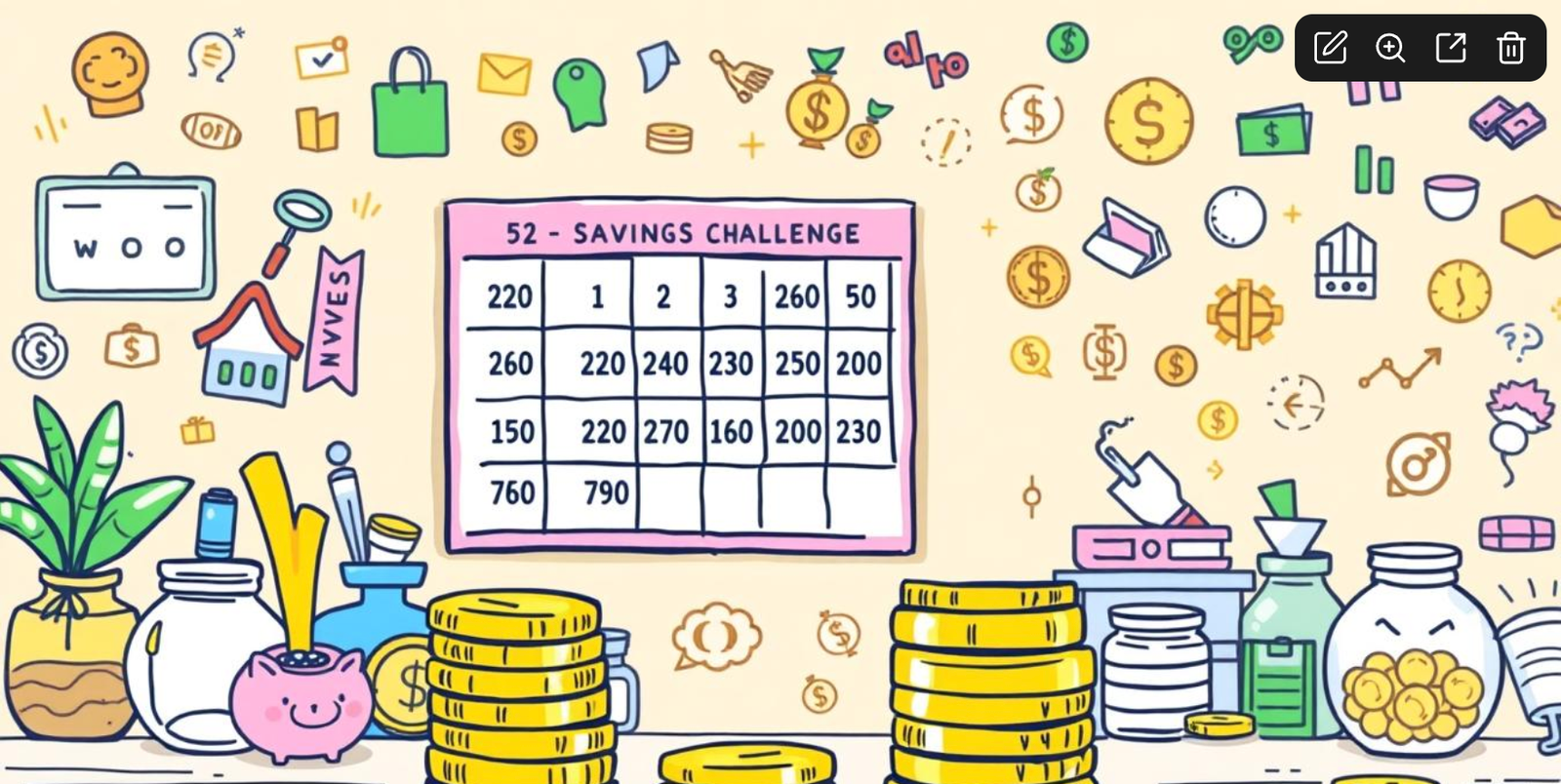
The idea is simple: save $1 in the first week, then add $1 more each following week until you deposit $52 in week fifty-two. By year-end you’ll have $1,378, and you may earn extra if you use a high-yield account.
People share this plan because it’s transparent and easy to follow. The predictable schedule removes guesswork and helps you build a habit over time.
- The plan starts tiny and ramps up slowly, so it fits tight budgets.
- Social posts and groups create accountability that keeps you going.
- Real-life examples show how small deposits add up into meaningful money by year-end.
- It’s one of the simplest ways to begin saving without complex tools or big commitments.
How to Do the 52-Week Savings Challenge Step by Step
Saving money doesn’t have to be overwhelming. The 52-week savings challenge breaks it into small, manageable steps so you can build your savings gradually without feeling stressed. Follow this simple routine, and by the end of the year, you’ll have a nice financial cushion.
Step 1: Start Small and Build Gradually
The key to this challenge is starting with an amount you can easily manage. In week one, save just $1. Then, in week two, save $2, and continue adding $1 more each week. By the time you reach week 52, you’ll be saving $52 in that week alone.
This gradual increase makes each weekly deposit manageable, and it helps you build the habit of saving consistently. By the end of the year, you will have saved a total of $1,378, all without feeling the pinch.
Step 2: Track Your Deposits and Total Saved
Keeping track of your progress is motivating and prevents you from missing a week. You can:
- Use a simple spreadsheet with columns for week number, deposit amount, and total saved.
- Or use a savings app to log deposits and watch your balance grow.
- Label each entry clearly by week number so you can see at a glance whether you’ve made your weekly deposit.
Seeing the total rise week by week makes the process satisfying and keeps you accountable.
Step 3: Set Up Automatic Transfers
One of the easiest ways to stick to the plan is by automating your savings:
- Set up a recurring weekly transfer from your checking account to a dedicated savings account.
- Schedule it on the same day each week so it becomes part of your routine.
- Automating your deposits removes the guesswork and reduces the chance you’ll forget to save.
Once it’s set up, the money moves automatically, and you can relax knowing you’re consistently building your savings without thinking about it.
Step 4: Stay Flexible and Adjust When Needed
Life happens, and some weeks may be tighter than others. Don’t get discouraged:
- If you miss a week, simply make up the deposit the following week.
- You can also adjust the starting amount if saving $1–$52 feels too small or too big—just keep the incremental increase each week.
The goal is consistency and forming a habit, not perfection. Even small steps count toward building a financial cushion.
Step 5: Celebrate Your Progress
As your savings grow, take a moment to acknowledge your achievements:
- Mark milestones like $100, $500, or $1,000 saved.
- Treat your progress as a personal win to stay motivated for the weeks ahead.
By week 52, not only will you have $1,378 saved, but you’ll also have built a powerful habit that can help you save even more in the future.
Pick a weekly deposit day and stick to your plan
- Match deposits to your payday cycle or double up when needed.
- Batch-adjust if you miss a contribution by splitting it over a few weeks.
- Keep confirmations as a simple audit trail to stay motivated.
| Period | Deposit | Cumulative |
|---|---|---|
| Start (week 1) | $1 | $1 |
| Mid (week 26) | $26 | $351 |
| End (week 52) | $52 | $1,378 |
Why This Savings Challenge Works for Your Brain and Your Budget
The 52-week savings challenge isn’t just about putting money aside—it’s also designed to train your brain and fit your budget without causing stress. By gradually increasing the amount you save each week, this method makes building a savings habit easier, more natural, and surprisingly satisfying.
Gradual Increases Make Saving Manageable
Instead of cutting a large chunk out of your budget all at once, this challenge ramps up deposits slowly. You start with just $1 in week one and increase your deposit by $1 each week.
This tiny, incremental approach is easier for your brain to accept. You don’t feel like you’re sacrificing a big part of your lifestyle, which reduces resistance and helps your saving habit stick. Over time, the routine becomes second nature, and your brain starts to view saving as a normal, painless part of your week.
Small Weekly “Level-Ups” Reduce Financial Stress
Think of each week as a level-up in a game. Each increase is small enough that your wallet barely notices, but your savings balance grows steadily. By avoiding sudden, large cuts to your spending, you protect your budget from shock while still making real progress toward your goal.
These consistent, gradual gains also create a positive feedback loop: seeing your balance grow motivates you to continue saving, reinforcing the habit further. Over a few months, saving stops feeling like a chore and starts feeling like a rewarding routine.
Building a consistent habit toward emergency fund and other goals
- You’ll feel less pain because small level-ups beat sudden changes to spending.
- You’ll form a reliable habit through repetition, turning deposits into routine.
- You’ll build momentum and reach a $500 emergency fund faster than by lump-sum attempts.
- You’ll use time to trim costs and find simple ways to free extra cash.
- You’ll avoid decision fatigue with a clear schedule and frequent wins.

Where to keep your money: choose a high-yield savings account
Where you park your money can change how fast it grows over a year. Picking an account that pays more interest makes each deposit work harder while you build the habit.
Earn more interest versus a standard savings account
The average savings account yields about 0.38% APY. Many online banks offer several times that rate, so your balance can grow faster with a high-yield savings option.
Avoid monthly fees that erode your balance
Choose an account without maintenance fees. Even small monthly charges can eat into your funds and negate earned interest over time.
Use a savings calculator to estimate potential interest
Run numbers at different rates to see how interest and compounding change your total by year end. Consider reversing the deposit order so larger early deposits earn interest longer.
- Compare rates at reputable online banks to maximize returns.
- Confirm how often interest compounds and when it posts.
- Keep this money separate from checking and set automatic transfers to stay on track.
Stay motivated from week one to week fifty-two
Momentum comes from visible progress and simple rituals. Write your main goals in plain words so each deposit feels meaningful.
Share your goals and celebrate milestones along the way
Tell a friend or family member about your plan to add light accountability. Small rewards at milestones keep you motivated.
- Write your purpose—starter emergency fund or a trip—so each deposit has meaning.
- Set mini-milestones like $100, $500, and $1,000 and celebrate cheaply.
- Track progress with a chart or app so growth is visible every month.
- Use calendar reminders and a steady deposit day to build the habit.
What to do if you miss a week: adjust and keep going
If you miss a deposit, add what you can or spread the catch-up across the next few deposits. No guilt—consistency over perfection wins by year end.
After you finish, celebrate and think about rolling this habit into a larger goal like a college fund or retirement for your future. That way the small actions you take today keep paying off tomorrow.Flexible ways to save: reverse order, lump-sum boosts, and timing
Front-load your deposits to give bigger amounts extra time to grow. Reversing the plan by depositing the largest sums early keeps money in the account longer. That can boost interest slightly over the year.
Plan which months carry higher amounts so you aren’t surprised. Map deposits to your pay schedule and mark months with big bills. When income allows, add a lump-sum boost from a bonus, refund, or gift to get ahead.
- Deposit $52 in week one (reverse method) so larger sums earn more interest.
- Schedule transfers right after payday to protect the amount from impulse spending.
- Break big deposits into two smaller transfers if cash flow is tight.
- Keep a small checking buffer to avoid overdrafts when timing is tight.
| Method | Benefit | When to use |
|---|---|---|
| Reverse order | More time for interest | When you start the year with extra cash |
| Lump-sum boost | Speeds progress | After tax refunds or bonuses |
| Split transfers | Easier monthly budgeting | During tight months |
Planning your cash flow so larger weekly amounts don’t derail you
Plan now so rising deposits fit your cash flow instead of surprising it. Anticipating bigger amounts makes the rest of your budget easier to manage and keeps stress low.
Trim spending and find small ways to save money each week
Free up the extra amount by cutting tiny, regular costs. One fewer restaurant meal or pausing a subscription can cover late-year deposits without pain.
- Skip one takeout meal to save the deposit for that week.
- Pause or downgrade a streaming plan and redirect the money to the account.
- Use round-ups or sweep features to add spare change automatically.
Align deposit amounts with paychecks and monthly budgeting
Match transfers to your payday so funds move before you spend them. Track income from salary, side gigs, or seasonal work and time larger deposits when cash is strongest.
Balance short-term needs with long-term financial goals
Budget ahead for expensive months by pre-saving a week or two when you can. Keep your challenge funds separate so essentials stay funded while you still build long-term savings.
| Action | When to use | Benefit |
|---|---|---|
| Align with payday | Each pay period | Prevents impulse spending |
| Pre-save for costly months | Before holidays | Reduces stress later |
| Automate round-ups | Ongoing | Adds small extra amounts |
Revisit your plan monthly to ensure the rising deposits still fit. With small trims, smart timing, and a separate account, you can complete the challenge without sacrificing essentials.
Know the fine print: promotions, sweepstakes, and account terms
Before you opt into any promotion, take a minute to read the official rules so you know what you’re signing up for. That helps protect your funds and your time.
Check whether the offer is a sweepstakes of chance and if no purchase is necessary to enter. Confirm eligibility rules like age, residency, and whether you must hold a specific account or be a member of a credit union or bank.
- Note exact timing: when the promotion begins and when the challenge ends.
- Confirm prize details and tax responsibilities so you can plan if you win.
- Look for an Alternative Method of Entry if you aren’t a member and follow mail-in steps precisely.
| Topic | What to verify | Example from GTE Financial |
|---|---|---|
| Eligibility | Age, residency, membership status | Florida residents 18+, must hold a qualifying account |
| Timing & entry | Start/end dates and AMOE deadlines | Begins Jan 1, 2025; ends Dec 31, 2025; mail entry by Nov 31, 2025 |
| Prize & rules | Amount, delivery, taxes, winner selection | $1,378 to winner’s primary savings account; taxes apply; drawing Jan 31, 2026 |
Read dispute, privacy, and promotional-use clauses so you know how your data may be used. Remember: the core plan still helps build an emergency fund whether or not you join any sweepstakes.
Conclusion
Finish the year with small, steady deposits and a clearer view of your cash priorities. This friendly savings challenge shows that modest effort each week adds up to a meaningful amount by year end.
Automate one transfer, track your deposits, and park the balance in a savings account that avoids fees. You’ll reach the total without needing drastic cuts to your budget.
Consider a high-yield savings account or reverse the order so larger amounts earn interest longer. Both moves help your money work harder while you save.
Use the plan as a launchpad for an emergency fund or retirement nest egg. Missing a week isn’t final—adjust and continue toward your goals.
Now set your first transfer and let this simple, repeatable way help you save money steadily through the year.